Contact us
High contrast

Inpatient treatment of excretory disorders

This page has been automatically translated.

A functional defecation disorder is a difficulty with passing stools that cannot be explained solely by physical causes; the psychosocial situation also plays a role.

Typical symptoms of this condition include chronic constipation, pain during bowel movements, anal sores or large, thick stools. Furthermore, it can lead to loss of appetite, recurrent abdominal pain, soiling, faecal incontinence or bedwetting. As a secondary issue, affected children often display behavioural problems. Some react with frustration and aggression, whilst others become anxious or withdrawn.

Inpatient treatment of functional elimination disorders at the UKBB is provided on an interdisciplinary basis in collaboration with paediatrics, child psychiatry and paediatric nursing, as well as other disciplines where appropriate (dietetic advice, speech and language therapy, physiotherapy, occupational therapy, music therapy). All these disciplines play key roles in the therapeutic process and are in constant communication with one another. Treatment usually lasts two weeks.

Procedure prior to treatment

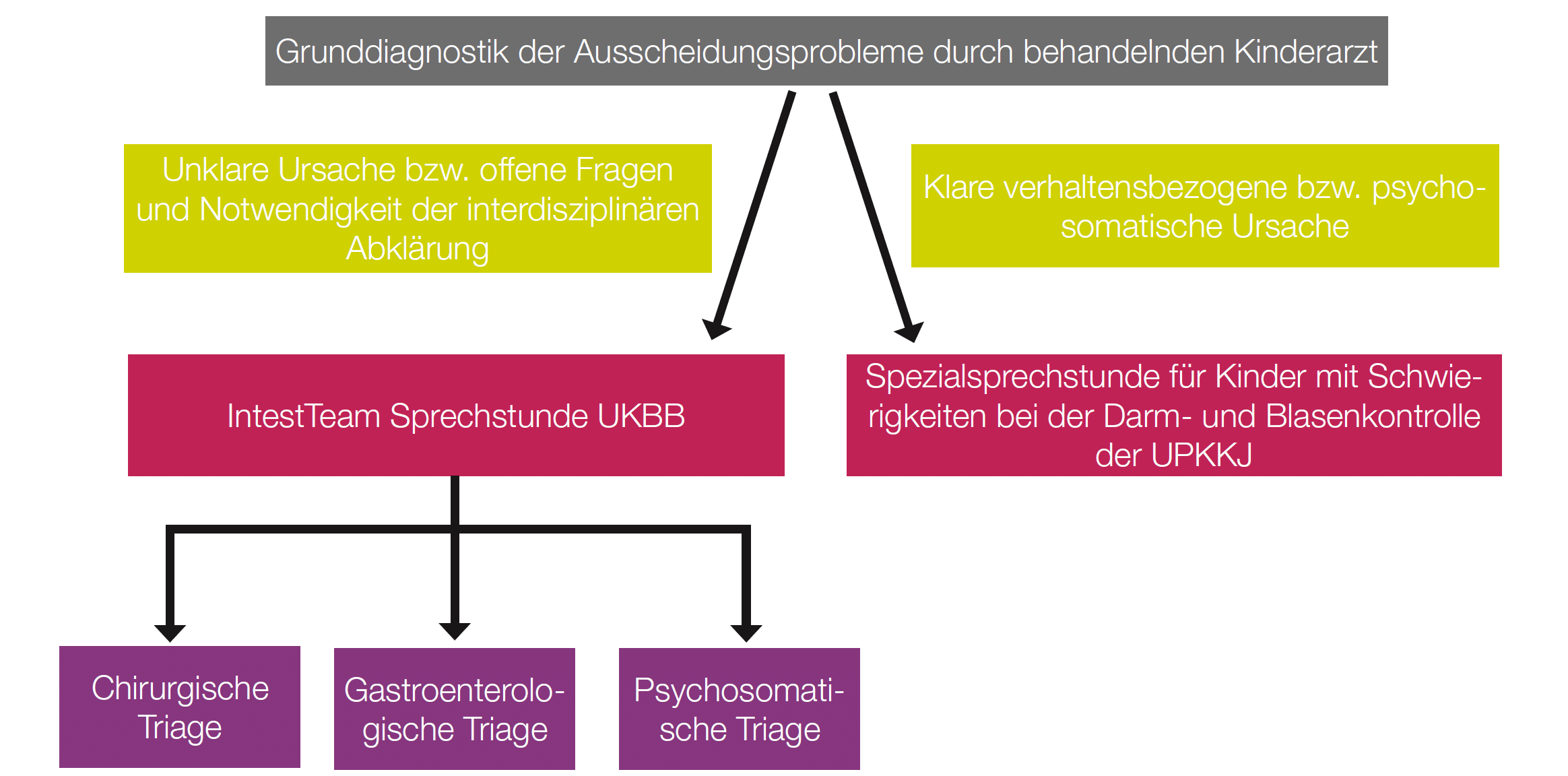
  • Assessment at the IntestTeam clinic in the UKBB outpatient department or at the specialist clinic for excretory disorders in the outpatient department of the UPKKJ (University Psychiatric Clinics, Department of Paediatrics and Adolescent Psychiatry).
  • Where necessary, planning of mitigation measures.
  • At least one initial outpatient consultation with the treating psychologist. A decision on the treatment setting (outpatient/inpatient) and an explanation of the content and rules of the treatment.


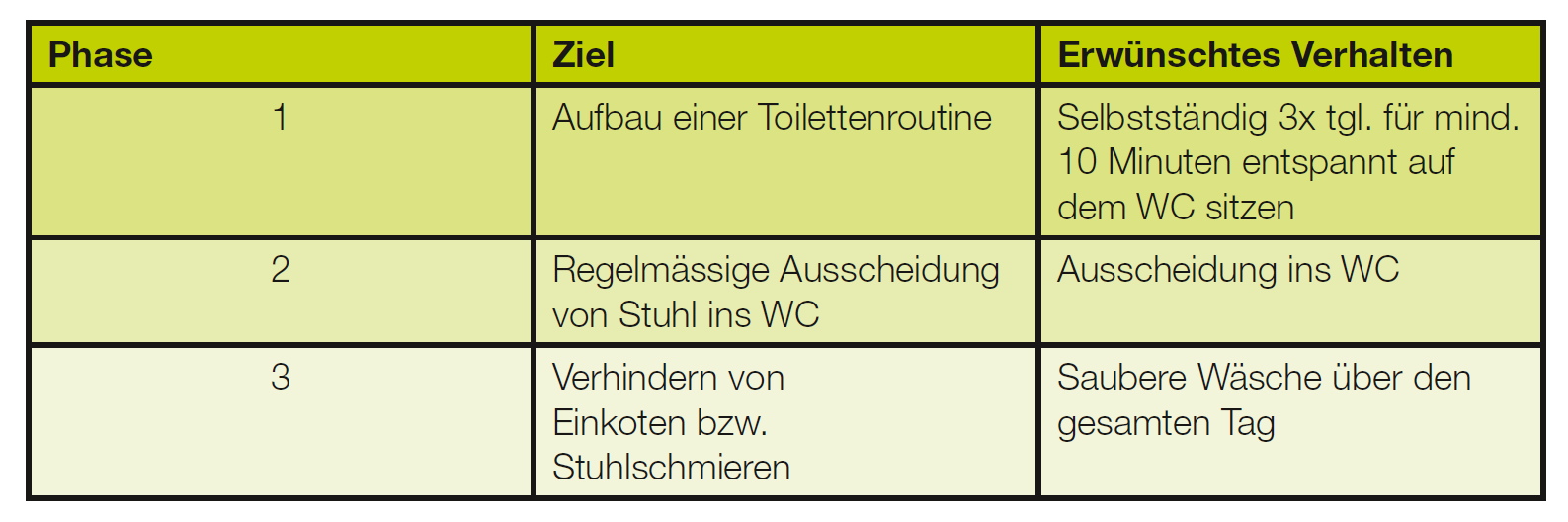
The treatment plan is based on three phases of therapy

  • Complete evacuation of faecal matter from the bowel.
  • Behavioural toilet training to promote regular bowel movements and prevent further constipation.
  • Behavioural therapy and pharmacological prevention of relapses into constipation.

General ward rules

  • Admission to the UKBB takes place every Tuesday between 1.30 pm and 2.00 pm. The exact time will be confirmed in the appointment invitation.
  • The minimum length of stay is six nights.
  • The treatment is designed as family therapy; therefore, the presence of both parents or one parent is required throughout the entire stay.
  • The treatment plan involves consistently adhering to a toilet training programme, ensuring an optimal diet and level of physical activity, and maintaining a regular daily routine.
  • Treatment is provided on an inpatient basis. Patients may be allowed to take short breaks (to leave the hospital grounds) on an hourly basis once they have settled in sufficiently.
Counselling hotline for child and youth emergencies

The Medgate Kids Line provides quick and uncomplicated medical advice if your child is unwell. The medical team of our partner Medgate is available to you by telephone around the clock.

058 387 78 82
(billing via health insurance)

For emergencies abroad: Call the emergency number of your health insurance company. You will find this number on your health insurance card.

More information: On the Page of the emergency ward you will find everything you need to know about behaviour in emergencies, typical childhood illnesses and waiting times.

Important emergency numbers

144 Outpatient clinic
145 Tox Info Suisse (Poisonings)
117 Police
118 Fire brigade

UKBB

University Children's Hospital Basel
Spitalstrasse 33
4056 Basel | CH

Contact us

Which topic would you like to contact us about?
For praise or criticism, please use the Feedback form.

Reason for contacting us *

Appointments cannot be booked via the contact form. To book or reschedule an appointment, please contact:

  • Therapies: +41 61 704 12 16
  • Paediatrics and Surgery: +41 61 704 12 20
  • Neuropaediatrics: +41 61 704 26 97
  • Haematology: +41 61 704 12 40
  • Orthopaedics: +41 61 704 28 86
Patient name *
First name patient *
Patient's date of birth *
Name *
First name *
Telephone number
E-mail address *
Your enquiry *
Who should contact you?
How would you like to be contacted? *
Remarks *
Date of cancellation
Contact us by telephone for a new appointment *
Reason for the cancellation