Contact us
High contrast

Subcutaneous injection

This page has been automatically translated.

Medgate Kids Line (billing via health insurance)

At UKBB, you have been shown how to inject the required medication into your child's subcutaneous tissue (subcutaneous injection). We have summarised the most important points here for you to read.

Where do I store the pre-filled syringes?

Store the medicine according to the pharmacy's instructions. In any case, avoid temperatures below 0° or above 30°. Some medicines must be stored in the refrigerator. In this case, take the medicine out of the refrigerator about 30 minutes before administration.

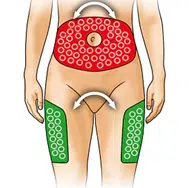
Which areas of the body are suitable for injections?

  • Upper arms
  • Thigh
  • Belly

Material

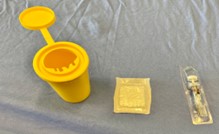
Prepare the material on a clean surface:

  • Prescribed medication
  • Gauze swab
  • Disposal container
  • Possibly plasters
  • Possibly cold compress

Important information about the puncture site

Change the puncture site each time

To prevent damage to the skin and underlying tissue, you should change the injection site with each injection. Keep a distance of at least one to two centimetres from the last injection site. If you have been administering medication for a long time, it may help to mark the last injection site on a small plan with the date.

Which areas of the body are NOT suitable for injections?

  • Areas of skin that are reddened, swollen, hard or inflamed
  • Surrounding area of surgical wounds
  • Scars
  • Bruising («bruising»)

Possible complications

  • Bruising
  • Pain
  • Loss or gain of fatty tissue
  • Hardening or thickening of the skin
  • Bleeding
  • Infection of the puncture site
  • allergic reactions such as redness, itching, inflammation, wheal formation

Carrying out the injection

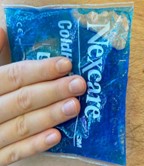
You can apply a cold compress to the selected area for a few minutes. This makes the skin slightly less sensitive.

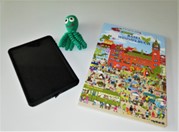
Inform your child and, if necessary, prepare toys, books or a film to distract them.

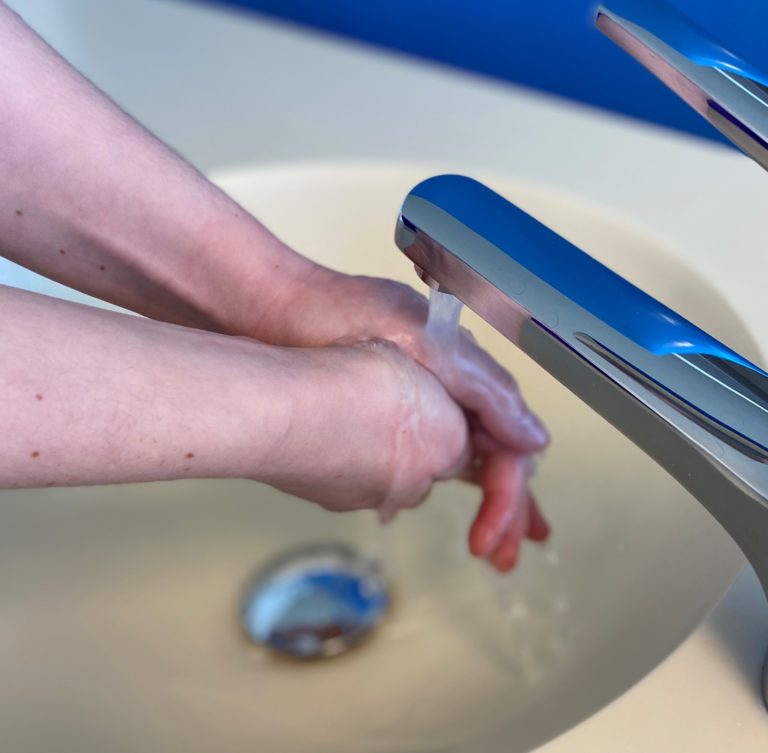
Wash your hands thoroughly with soap and dry them with a clean cloth.

wash hands
  • Is the drug name and dose correct?
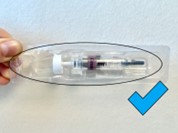
  • Is the packaging intact?
  • Has the expiry date not yet passed?

It is also necessary to disinfect your child's skin at home. This is carried out with an alcohol swab.

Remove the alcohol swab from the packaging and swipe once over the selected skin area. Wait 30 seconds for the disinfectant to take effect and the skin to dry.

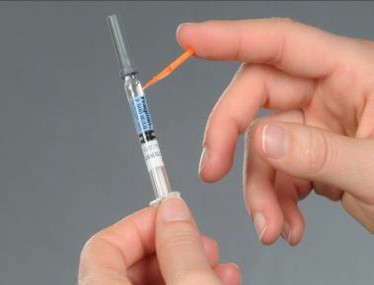
Grasp the tip of the needle guard and fold it to the side.

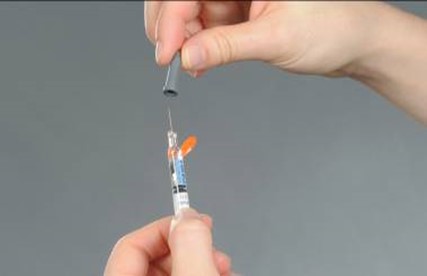
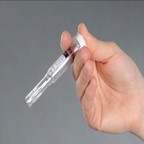
Hold the syringe with your guide hand and remove the protective cap. This is done in the same way for Clexane® and Fragmin®.

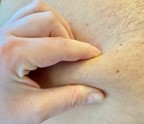
Grasp the skin between the thumb and index finger of the same hand. Lift the skin in a fold two to three centimetres thick.

Hold the syringe with the tip pointing downwards.

Squeeze the skin fold briefly directly before the injection and insert the needle at an angle of 45 degrees.

Press the plunger of the syringe downwards. This should be done slowly and without moving the syringe back and forth. When you have injected all the liquid, wait for about ten seconds before pulling the needle out quickly.

Press briefly on the puncture site with a dry, sterile swab.

Place the cold compress on the injection site for a few minutes. This reduces pain.

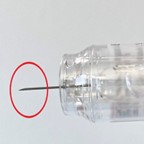
Press the needle holder against a hard, firm surface until the needle engages with a clearly audible „click“.

After the injection, press the plunger of the syringe again. The needle cover pops out and covers the needle.

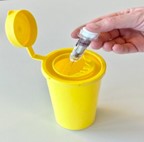
You can obtain a small disposal container from the pharmacy. Dispose of the used pre-filled syringe in it without putting the protective cap back on the cannula.

Important information on administering medication

When should I give the medication? If possible, always give the medication at the same time as in hospital.

What do I do if an injection has been forgotten? If your child is receiving a blood-thinning medication, it will no longer have complete protection against the formation of blood clots (thrombosis). Nevertheless, give the next injection at the usual time and inform your paediatrician.

What should I do if my child receives a blood thinning medication (e.g. Clexane® or Fragmin®)? In this case, blood clotting is slowed down. Your child should therefore wear a helmet when cycling, scootering, inline skating or skiing. Contact your paediatrician if your child:

  • has fallen heavily on his head.
  • is bleeding profusely from the mouth or nose.
  • your child's urine is reddish or brownish in colour.

If you have any questions, please contact your paediatrician or contact the Medgate Kids Line (billing via health insurance): +41 58 387 78 82.

Counselling hotline for child and youth emergencies

The Medgate Kids Line provides quick and uncomplicated medical advice if your child is unwell. The medical team of our partner Medgate is available to you by telephone around the clock.

058 387 78 82
(billing via health insurance)

For emergencies abroad: Call the emergency number of your health insurance company. You will find this number on your health insurance card.

More information: On the Page of the emergency ward you will find everything you need to know about behaviour in emergencies, typical childhood illnesses and waiting times.

Important emergency numbers

144 Outpatient clinic
145 Tox Info Suisse (Poisonings)
117 Police
118 Fire brigade

UKBB

University Children's Hospital Basel
Spitalstrasse 33
4056 Basel | CH

Contact us

Which topic would you like to contact us about?
For praise or criticism, please use the Feedback form.

Reason for contacting us *

Appointments cannot be made via the contact form. To make or reschedule an appointment, please contact the Polyclinic Control Centre +41 61 704 12 20

Patient name *
First name patient *
Patient's date of birth *
Name *
First name *
Telephone number
E-mail address *
Your enquiry *
Who should contact you?
How would you like to be contacted? *
Remarks *
Date of cancellation
Contact us by telephone for a new appointment *
Reason for the cancellation