This page has been automatically translated.
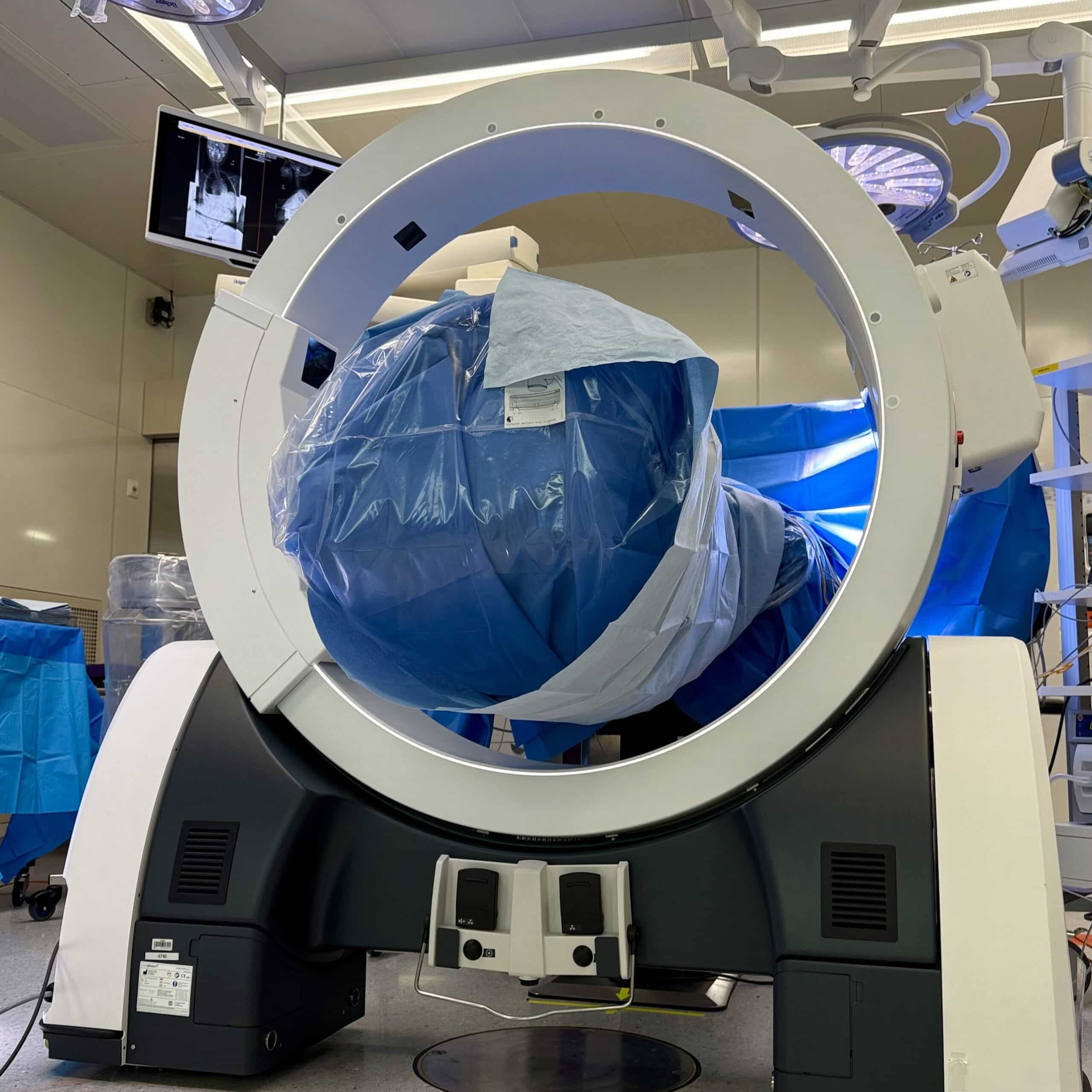
The Loop-X imaging robot is being used at the UKBB to assist with complex spinal procedures in the operating theatre and is making a noticeable difference to paediatric orthopaedic practices.
Surgery on the paediatric spine is among the most challenging procedures in orthopaedics. The conditions are often rare, the anatomy is sometimes significantly altered – and yet there is very little room for error.
At the same time, case numbers are lower than in adult medicine. It is more difficult to establish a routine, which further highlights the importance of precise and reliable intraoperative imaging.
At the UKBB, this need was becoming increasingly apparent. The existing system was showing its age and could only meet requirements to a limited extent. As the service contracts came to an end, it was clear that a replacement solution had to be found.
During the evaluation process, the team examined various solutions. The decisive factor was not so much any single technical detail as the question of how well a system could be integrated into the existing daily routine in the operating theatre.
During testing, it quickly became clear what matters most: imaging, navigation and procedures must work in tandem – particularly when the anatomical conditions are complex.
In the end, the choice fell on Brainlab’s imaging robot: Loop-X is a mobile cone-beam CT scanner that integrates seamlessly with existing navigation and planning systems and can be used flexibly in the operating theatre.
Following its introduction in early 2025, the initial procedures were closely monitored. At first, there were many questions, for example regarding patient positioning or integration into existing workflows. However, these were resolved just as quickly as the necessary confidence in using the new system grew. Today, Loop-X is an integral part of everyday surgical practice in spinal surgery.
The difference is particularly evident during the procedure. With Loop-X, imaging is more precise than ever before. This is particularly helpful in cases where the anatomy differs significantly from the norm.
It makes it easier to navigate deformed spines, where each procedure requires individual adjustments. At the same time, larger sections of the spine can be visualised at once. For patients, this means, among other things: fewer individual images, lower radiation exposure and shorter procedures overall – factors that significantly reduce the risk profile of the procedures.
The impact of Loop-X on teamwork in the operating theatre should not be underestimated. In situations where decisions have to be made under time pressure, improved imaging lays the foundation for clearer procedures and greater safety.
The system can be operated directly by the surgeons. That may not sound particularly impressive at first glance. But in an environment where so many factors are constantly at play simultaneously, it makes a noticeable difference when there are fewer dependencies within the team.
It is particularly helpful for surgeons that decisions are based on what is immediately visible. Precise imaging makes it possible to check, even during the operation, whether the intended result has been achieved. If adjustments are needed, they can be made straight away.
PD Dr Daniel Studer, senior consultant in paediatric orthopaedics and head of the Spine Team, puts it this way: «Thanks to our experience and technological advances, we can further reduce the overall risk profile.»
Particularly in the case of complex spinal surgery, where each procedure must be tailored to the individual patient, this form of support provides additional guidance in the operating theatre.
The experience gained from previous procedures is already being applied to new areas of application. In future, the Loop-X is also set to be used in operations in the pelvic region and on the lower limbs.
At the same time, the orthopaedic team is working to integrate planning and implementation even more closely. The aim is to further streamline processes and apply the precision gained in a targeted manner to day-to-day clinical practice.
The Medgate Kids Line provides quick and uncomplicated medical advice if your child is unwell. The medical team of our partner Medgate is available to you by telephone around the clock.
For emergencies abroad: Call the emergency number of your health insurance company. You will find this number on your health insurance card.
More information: On the Page of the emergency ward you will find everything you need to know about behaviour in emergencies, typical childhood illnesses and waiting times.
144 Outpatient clinic
145 Tox Info Suisse (Poisonings)
117 Police
118 Fire brigade
Which topic would you like to contact us about?
For praise or criticism, please use the Feedback form.