This page has been automatically translated.
After an intensive period of preparation, the sports study SURfit of the University Children's Hospital Basel (UKBB) is now in the final stages of implementation.. However, the work of Prof. Nicolas von der Weid, Head of the Department of Haematology-Oncology at UKBB, and his team is not yet finished: This will be followed by two years in which the collected data need to be analysed. It will then become clear whether sport can reduce the late effects of cancer treatment. Von der Weid and sports scientist and study leader Dr Iris Bänteli provide an initial interim assessment.
Thanks to major advances in the treatment of childhood cancer, around 80 per cent of young patients can currently be cured. After recovery, however, the so-called survivors are left to fend for themselves, as there is often no structured medical aftercare. Cardiovascular diseases, obesity and osteoporosis can develop as a result of the medication and radiotherapy. But it is not only the body that suffers from the disease. The mental health of former cancer patients is also somewhat worse than that of their siblings or people from the general population.
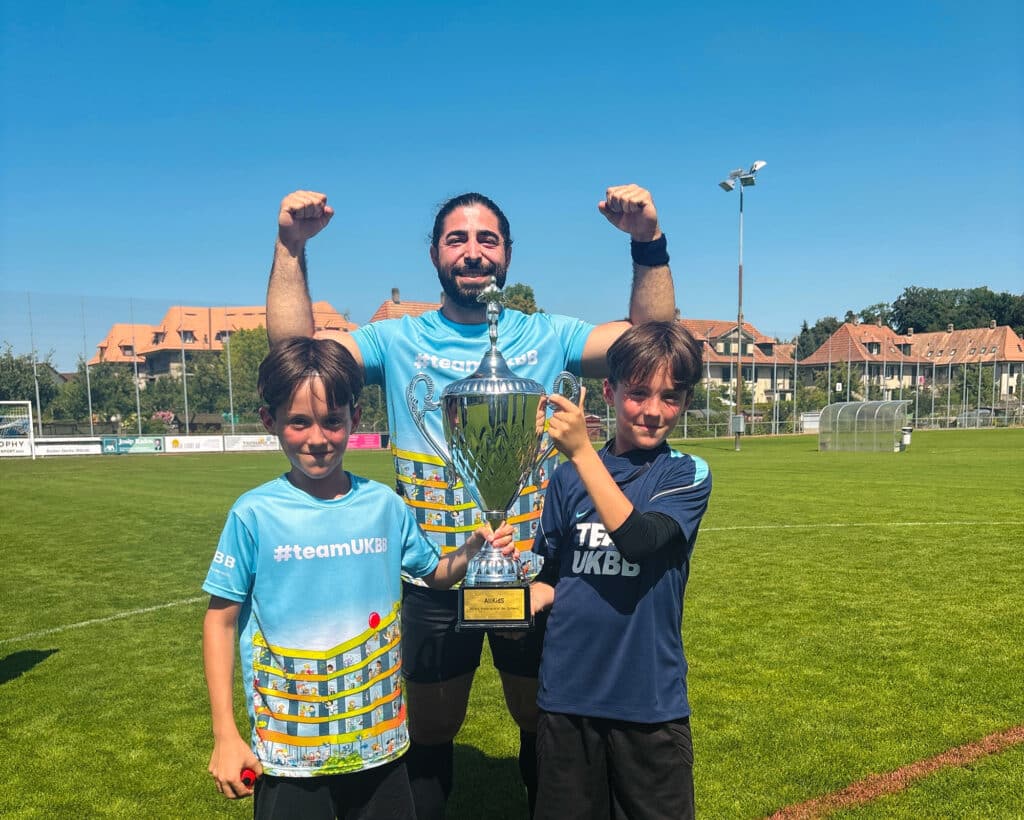
The knowledge that sport has a positive effect on the psyche and on various areas of the body served the study SURfit as the guiding principle. According to Prof von der Weid, exercise could be „a good medicine without side effects“. The interdisciplinary study team of doctors, physiotherapists and sports scientists from the UKBB, the University of Zurich (Prof Susi Kriemler, Institute of Epidemiology, Biostatistics and Prevention) and the University of Oslo (Dr Corina Rüegg, Institute of Epidemiology and Biostatistics) are investigating the extent to which this is actually the case with a total of 150 survivors aged between 16 and 50. For one year, half of the subjects (intervention group) did two and a half hours more sport per week than before, while the other half (control group) maintained the previous intensity. The type of sporting activity could be freely chosen.
„The commitment of the volunteers is remarkable,“ says von der Weid with delight. Not only the independent planning and implementation of the sports lessons, but also the health checks require a lot of organisation and adjustment in everyday life. A total of seven examinations have to be completed, which can take up to half a day. The test subjects travelled to Basel from all over Switzerland for this purpose. During the course of the study, it became apparent that not all of the test subjects were able to keep to the prescribed hours of exercise equally well. Keeping motivation high was therefore the most difficult task for the study team. The research team in Basel is not alone with these findings: „We also know from other international sports studies, for example in cystic fibrosis, that adherence to the sports programme varies,“ says von der Weid. Other reasons, such as a career change or an injury, can make participation in the study difficult or even impossible.
Furthermore, it was not easy for the test subjects from Basel in particular to return to the UKBB. It is the place with which they associate their cancer. Why did so many test subjects nevertheless agree to take part in the study? „Many former patients have an inner motivation to help, because the patients after them should be able to benefit from their experiences. By taking part in the study, they also want to give something back to medicine“, says Bänteli.
In addition to the great commitment of the test subjects and study staff, the financial support of patrons is also an important aspect of being able to master such a study. The study is co-financed by the Regio Basiliensis Foundation for Children with Cancer, the Swiss Cancer League, Swiss Cancer Research and the Susy Rückert Memorial Foundation for Combating Cancer. Comprehensive statements on the effectiveness of sport for former cancer patients can only be made once the data has been analysed. This is expected to be the case in 2020. However, von der Weid will be presenting the first detailed findings of the study to a public audience at the UKBB Researchers' Day, which will take place in Basel on 23 October 2018.
The Medgate Kids Line provides quick and uncomplicated medical advice if your child is unwell. The medical team of our partner Medgate is available to you by telephone around the clock.
For emergencies abroad: Call the emergency number of your health insurance company. You will find this number on your health insurance card.
More information: On the Page of the emergency ward you will find everything you need to know about behaviour in emergencies, typical childhood illnesses and waiting times.
144 Outpatient clinic
145 Tox Info Suisse (Poisonings)
117 Police
118 Fire brigade
Which topic would you like to contact us about?
For praise or criticism, please use the Feedback form.