As banal as it sounds, a young person is of normal height if they grow normally. This is because normal height depends on age and gender as well as on the genetic growth potential that is predetermined by the family. A person's growth potential can be calculated relatively accurately using the «Tanner formula» based on the height of the parents.
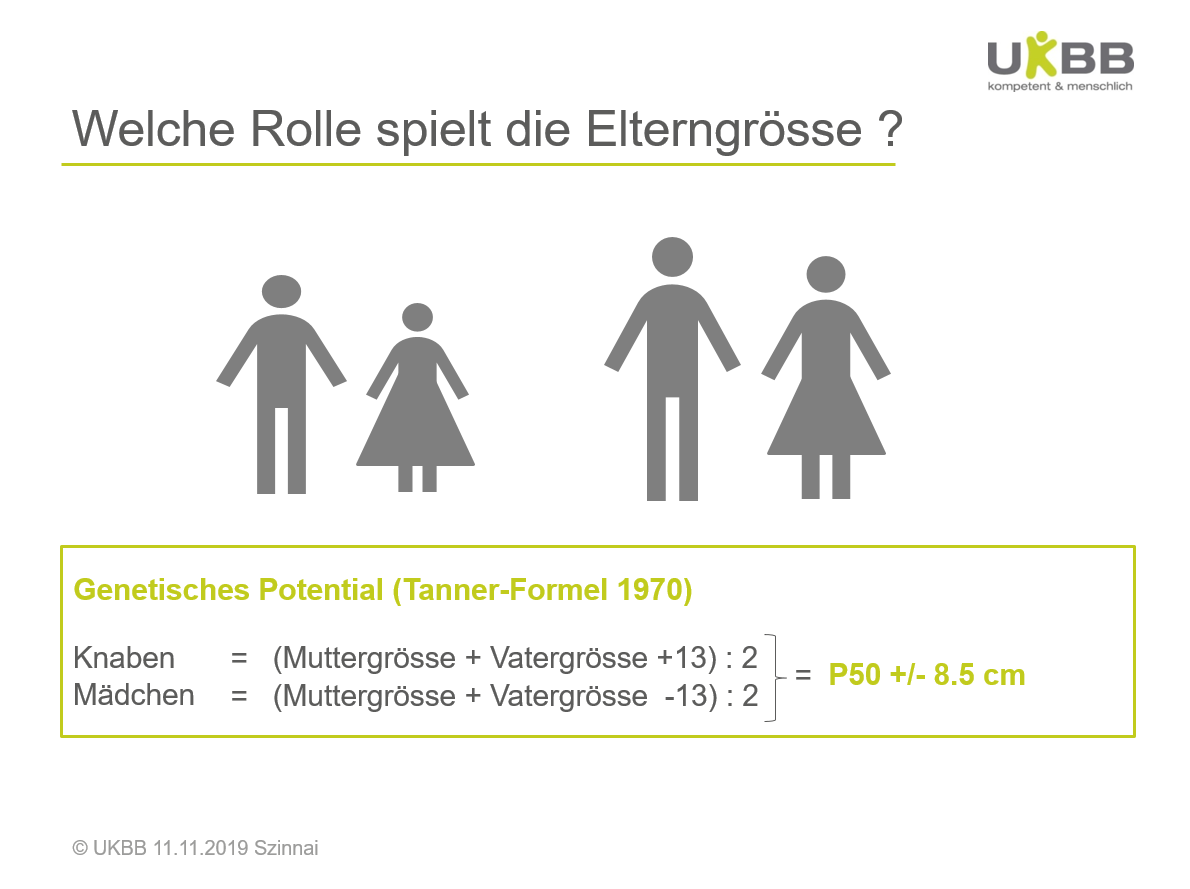
The bottom line is that only three per cent of adults are taller than the standard population. Another three per cent are smaller. Whether growth is progressing as it should up to this point is measured in so-called growth curves or Percentile curves visible. There is an ideal growth trajectory for every adolescent. However, if they deviate from this path, i.e. if they grow too slowly or too quickly, then it makes sense to clarify the situation. There could be an organ, hormonal or genetic disorder or, in even rarer cases, a bone disease.
However, 80 per cent are normal growth variants, namely familial short stature or tall stature or developmental delay. In the case of familial short stature, the genetic growth potential is below average. In the case of biological developmental delay, the children reach the normal range at the end, but grow longer than their peers and also show a later onset of puberty.
How should young people eat? Categorising individual foods as healthy or unhealthy is widespread, but difficult. This is because no single food contains all the nutrients and can provide the body with sufficient nourishment. Even if it is a healthy food: If you only ate that one food, you would not be adequately supplied with all nutrients. This also applies to so-called superfoods such as chia seeds or avocado.
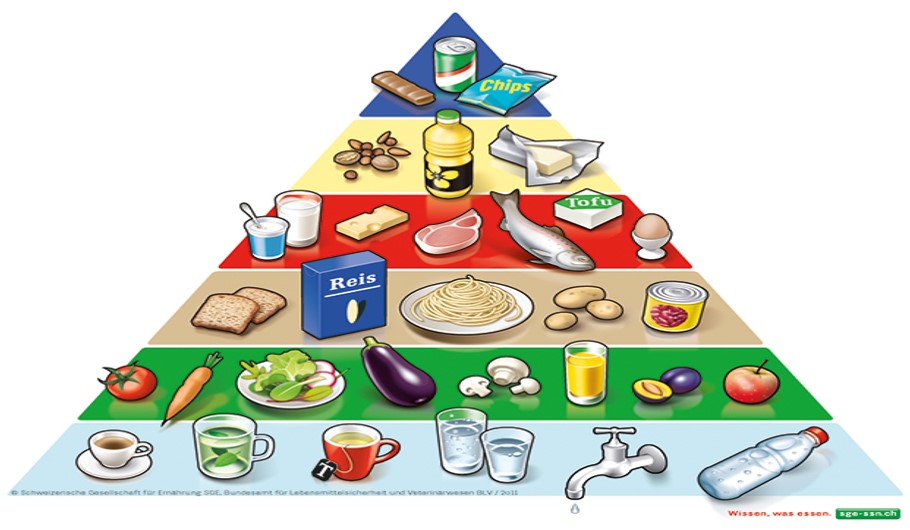
«In nutrition, »healthy« means »balanced". This means that you can eat anything - it's the quantity that counts! A burger is just as acceptable as a piece of chocolate or a portion of crisps. Of course, the body doesn't need chocolate or crisps. But indulgence is also part of a balanced diet. What the body needs a lot or a little of is shown by the Interactive Swiss food pyramid vividly.
Puberty brings with it various challenges, including with regard to nutrition. For example, the insecurities that characterise this phase can relate to one's own body. It is not uncommon for adolescents to start dieting during this time.
On the other hand, young people are increasingly travelling with friends. They are more likely to eat outside rather than at home - and this is often cheap fast food. Or they spend a lot of time on social media, which means they get less exercise. They also often eat in front of the television or while gaming.
Eating while distracted should be avoided at all costs, as we often eat too much in such situations and quickly get used to it. Eating should be something enjoyable that you consciously savour - preferably in company.
First things first: teenagers can't help it if they sometimes drive their parents crazy. For both girls and boys, puberty begins in the head. It is the hypothalamus that triggers the whole process from there. From then on, the mind and emotions are no longer a particularly good team.
What exactly happens? The neurons have to reconnect and the synapses, i.e. the connections between the cells, are rapidly reconnected in the brain. This process starts at the back of the cerebellum and ends at the front of the frontal lobe. The problem is that the «front» is responsible for things like planning, assessing risks and evaluating facts. In short, for everything that seems reasonable to adults.
This means that brain development is not synchronised. Instead, emotions take over during the period of change - with the familiar consequences.
Moodiness is part of puberty. But when is an upset a depression? When does a teenager go a little overboard? When is it an addiction? Such questions are not easy to answer. Not even in adolescent psychiatry.
Young people often have a completely different perception of what they are doing than their concerned parents. They don't think that they smoke too much weed, gamble or are too thin.
Parents need to listen carefully if their child's mood or behaviour has changed in a worrying way over several weeks. Unusual problems at school, neglected hobbies, no interest in friends - these are clear signs that parents need to take action.
In such cases, seek dialogue at an early stage. Look for solutions together. Even if you sometimes have the feeling that you can no longer reach your child: Remain persistent. Also try to trust your child. And seek help if you feel overwhelmed. Be it your partner, a counsellor or professional help.
Also be aware that puberty is a crisis. But young people mature through it. It is the time when they get the tools they need for adult life. And many find themselves precisely during this time.