This page has been automatically translated.
As a result of the new coronavirus, there was suddenly a shortage of ventilators in intensive care units around the world. A research team led by Prof Thomas Erb and Prof Jürg Hammer from UKBB wants to help counteract this bottleneck with a solution that is as innovative as it is cost-effective. We spoke to the project manager about the background to the project.
Mr Erb, you worked at the Basel Botnar Research Centre BRCCH successfully submitted a project that could contribute to improving patient care during the coronavirus pandemic. What is your project about?
The coronavirus pandemic has led to an acute shortage of ventilators. Conventional manufacturers were unable to meet the current demand. Another problem was the very high cost of these devices - not only, but of course especially for low-income countries. For this reason, technicians from a wide range of industries suddenly joined open source networks to create instructions for building low-cost ventilators. This step was important for the time being. But ventilating a sick patient is a lot more complex than you might imagine. During ventilation, large forces act on the lung structures. There is always a risk of damage to the lungs. This is where our project comes in.
What is the goal?
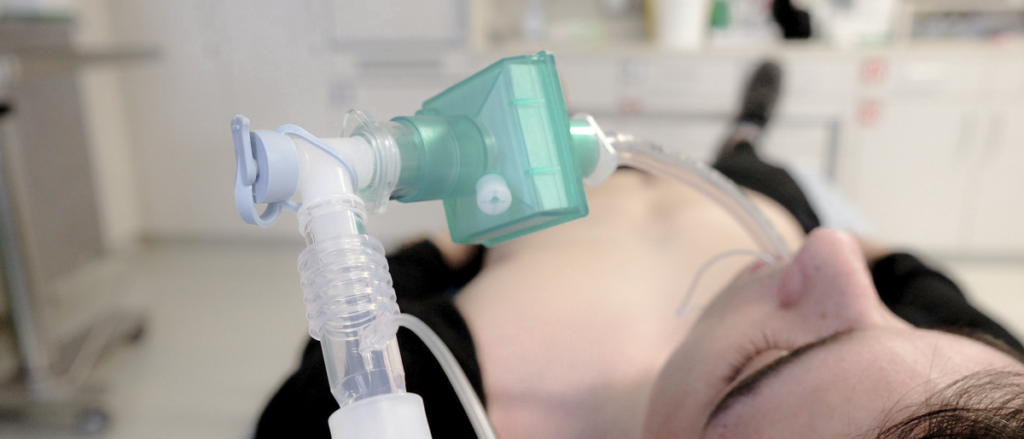
We want to enable gentler ventilation with an affordable open source ventilator. To do this, we need to find a way to determine the air pressure in the lungs more precisely than is possible with these devices. The pressure in the lungs is usually estimated in the ventilator and not measured in the lungs themselves. This harbours certain risks and is therefore not ideal for device control. Some of the open source devices mentioned above even lack a corresponding control mechanism for the control system. We would now like to measure the pressure in the trachea directly for the first time using a sensor that we attach to the tip of the ventilation tube. This would allow us to adjust ventilation more flexibly to the actual need. This could reduce the strain on the lungs and help acutely ill patients to return to independent breathing more quickly.
This is all still a dream of the future. How are you now proceeding to turn this idea into a tangible result?
Due to the acute need, we are of course initially interested in a quickly applicable, favourable solution. That is why we are building on what already exists. We will first identify the most promising ventilator for our project from the open source devices. The same applies to the sensor. This must be the right size and reliably provide precise measurement data over the entire treatment period. There are already numerous sensors on the market - we now have to find the most suitable one. And finally, we need to prove on a model that our method actually brings about an improvement.
Prof Dr med Thomas Erb is Head of Anaesthesiology/Day Clinic at UKBB and a member of the Executive Board. He is leading the project «COVent - Improve ventilation safety by means of intra-tracheal pressure monitoring - a short-term solution», which is being conducted in collaboration with Prof. Dr Mirko Meboldt, Dr Marianne Schmid Daners (both ETH Zurich) and Prof Jürg Hammer (UKBB) as well as in collaboration with the CentreSuisse d'Electronique et de Microtechnique (CSEM).
The project is being developed as part of the research initiative «FastTrack Call for Acute Global Health Challenges (FCT)» supported. With this initiative, the Botnar Research Centre for Child Health (BRCCH) is funding eleven projects dedicated to the diagnosis and treatment of Covid-19, a disease caused by the coronavirus, with a total of CHF 15 million over two and a half years.
What benefits do you expect from this new control system for artificial respiration?
Mortality is still high for ventilated patients and certain acute lung diseases. If the new method achieves even a slight improvement, this could make a significant difference. Ideally, the length of stay in the intensive care unit could also be reduced. This would mean that the next time an extreme situation arises: Less lack of space, less strain on staff and lower costs.
That sounds very promising. When do you think the first patients could be ventilated using your method?
At the moment, we are still at the «model» stage. So we still have a way to go. Ultimately, clinical studies will be necessary. But I think that if all the hypotheses are confirmed, we should soon have a usable solution that we can share again in the open source network. This would be entirely in line with the research initiative through which our project is being funded. This was launched by the Basel Botnar Research Centre for Child Health (BRCCH) at the beginning of the pandemic to promote short-term and pragmatic projects in the fight against Covid-19 diseases.
Can you tell us anything more about the future prospects for your project?
We have previously worked on a pressure sensor that only has paper thickness. This collaboration gave rise to the idea of submitting a project on this topic to the BRCCH. Such a thin sensor could be easily mounted on a ventilation tube. This would be an important requirement, especially when ventilating children. We would therefore like to continue working in this direction at a later date.
The Medgate Kids Line provides quick and uncomplicated medical advice if your child is unwell. The medical team of our partner Medgate is available to you by telephone around the clock.
For emergencies abroad: Call the emergency number of your health insurance company. You will find this number on your health insurance card.
More information: On the Page of the emergency ward you will find everything you need to know about behaviour in emergencies, typical childhood illnesses and waiting times.
144 Outpatient clinic
145 Tox Info Suisse (Poisonings)
117 Police
118 Fire brigade
Which topic would you like to contact us about?
For praise or criticism, please use the Feedback form.