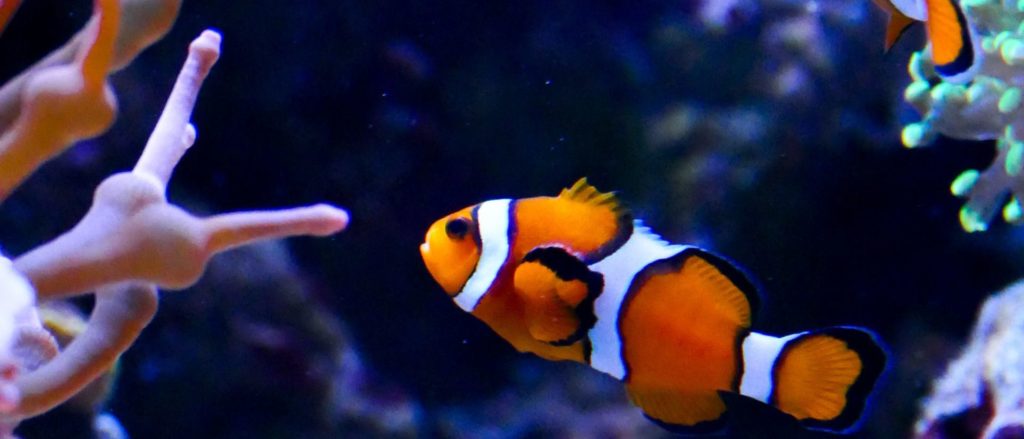
The children miss them most of all, the clownfish and surgeonfish that used to swim their colourful and cheerful laps in the UKBB's own aquarium. These fish are now in quarantine in a pet shop. The aquarium in the partition wall between the reception and the Nemo cafeteria has been emptied and covered with screens. What has happened?
On Thursday morning last week, the UKBB aquarium team realised something was wrong during their daily routine check. The salt content in the water was far too low, as the readings showed. It quickly became clear that the fish had to be taken out immediately, otherwise they would be in danger of worse.
Defect caused salt content to drop
As it turned out, the technology that regulates the water level in the aquarium broke down on Thursday night. As a result, so-called osmosis water flowed into the aquarium for several hours. This is water in its purest form, which has been freed of all other substances.
Osmosis water is actually used in aquariums to keep fish in the best of health. However, salt and minerals must be added to the water accordingly. This equalisation no longer worked due to the technical defect.
«Of course, we immediately alerted the specialists from the company that helps us maintain the aquarium,» says Daniel Eicher, Head of Facility Management at UKBB. He is, so to speak, the patron of the aquarium, which has been lovingly cared for and maintained by five other UKBB employees and a volunteer for years.
«An aquarium like this is a small ecosystem and a complex thing,» explains Daniel Eicher. You can't just add enough salt back into the water in one go, you have to slowly restore the right concentration.
What to do with the aquarium?
«Fortunately, we were able to save the fish,» says Eicher. The experts were also able to safely store some special stones. But for the rest of the aquarium's interior, which included an anemone and several corals, all help came too late. «The aquarium would now have to be rebuilt from scratch. This accident has undone years of work,» regrets Eicher.
The Chairman of the UKBB Management Board, Marco Fischer, is also saddened by the incident: «Our aquarium is very popular, especially with children who have to come to the UKBB frequently. For them, the fish are always something to look forward to.» It is therefore clear to Marco Fischer that the aquarium should be given a new lease of life so that the fish can return from quarantine to their familiar home. «However, the financing is still giving me a bit of a headache,» he admits.
The aquarium was originally financed by donations. The exact future of the aquarium is still unclear. Aquarium patron Daniel Eicher says: «We will also have to work with the specialists to find ways of recognising such a defect even more quickly in future, even if it occurs during the night.»